
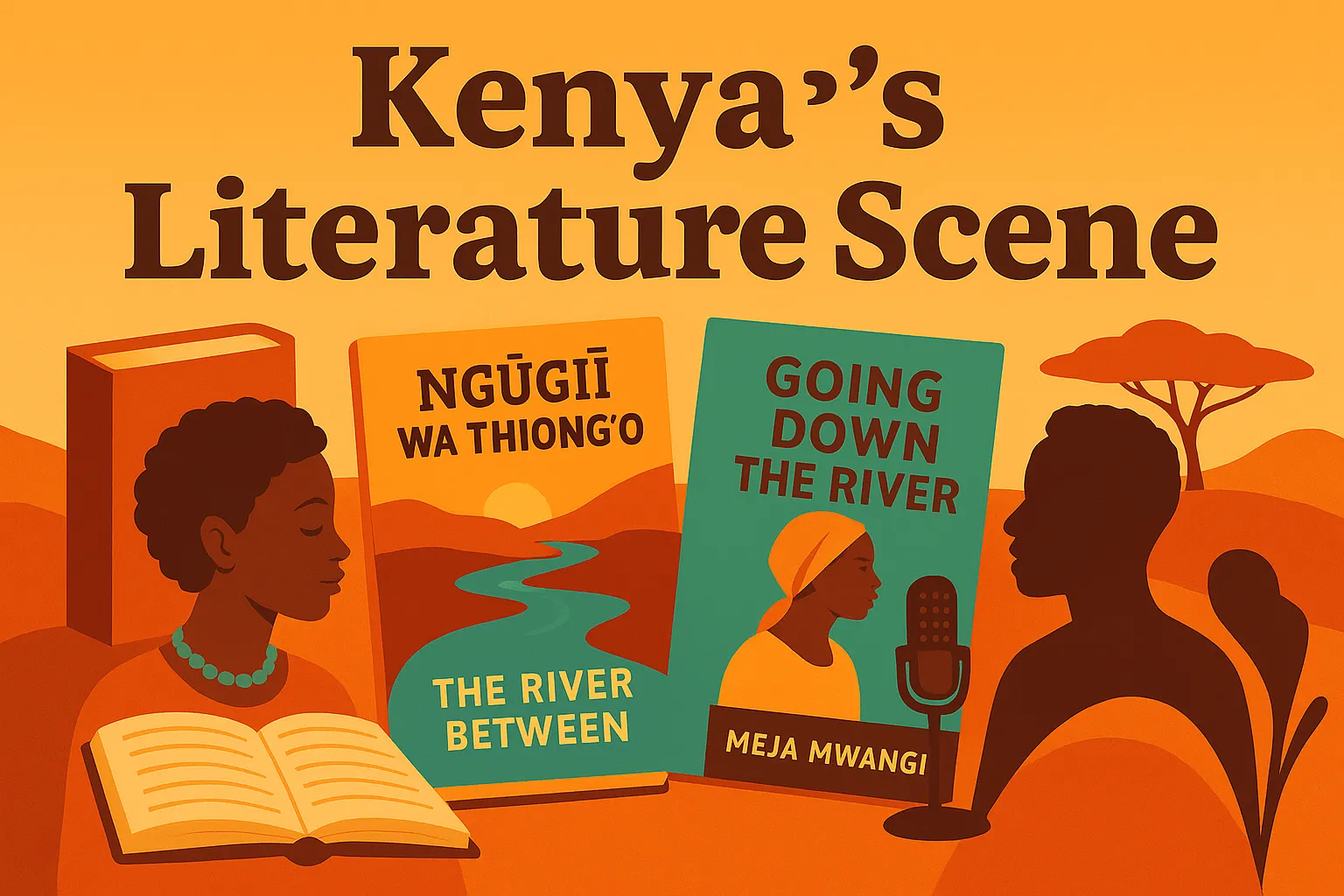
Kenya’s Literature Scene
Kenya’s literary scene has always been pulsating like a heartbeat, slow sometimes, but always steady, even when you are not paying attention to it. From the stories told around the fireplace on a moonlit night, to the dog-eared storybooks passed from one child to another, storytelling has always been part of who we are.
If you grew up around the same time as I did, the first story you read was probably a worn-out Hello Children. For me, I did not even know the title of the book because all I had was an old copy that barely had a cover, but I liked it regardless.
I clung on to every word of the book, so much that by the time I was in grade 4, I could recite it from memory. Looking back now, maybe my parents should have bought me more storybooks because how on earth do I still remember the first line of a book I read over 15 years ago?
Then came the graded readers that we all read and reread all across Primary school. Those were fire. But Kenyan literature did not end there. Not even close.
An Academic Awakening
Progressively, I have come to love, no, be obsessed with Kenyan literature. This may or may not have stemmed from my first literature class a few years ago when Professor Rutere spoke so passionately about Ngũgĩ wa Thiong’o and made us read nearly every single one of Ngũgĩ’s work over the four years he lectured us.
With every chapter of The River Between and every line of I Will Marry When I Want, I began to think that the good Professor may have underreacted. I was sold on the Kenyan literature train and nothing could make me disembark.
Pioneer Writers and the Foundation
Pioneer writers like Ngũgĩ, Grace Ogot, Meja Mwangi, Yvonne Adhiambo and Charles Mangua crafted a path so clear that modern writers had no option but to follow. Kenyan literature has always had a pulse of its own and the rise in self-publishing houses has given a platform for so many stories to be told.
The Contemporary Shift
Lately, there has been a shift. Writers, readers, enthusiasts and the entire literary community in Kenya has awakened. Not only have there been more book launches but there are more writing workshops, more book readings and newer voices being forged. Places like the Goethe-Institut, Cheche Bookstore and the Alliance Française continue to provide the stage for readings, discussions and launches that bring the literary community together. What’s more, bookstores stocked with every Kenyan play, novel or anthology you can think of, have been on the rise. Just thinking of this gives me goosebumps.
Writers like Troy Onyango, through his literary magazine Lolwe, are curating spaces for African storytelling that feels both global and deeply personal. Communities like Qwani have become hubs for new, bold voices. Young Kenyans are experimenting with form, language and identity and it is nothing short of amazing.
From traditional publishing giants to online blogs and magazines, from school anthologies to open mic nights, Kenyan literature is not just surviving, it is thriving. It is spoken, read, performed and lived.
Conclusion
Like a heartbeat, our stories live on. Even when we are long gone, they will stay and tell the kind of people we were. Philanthropic, charismatic, romantic and most importantly, unafraid of telling the truth.
I am excited to see the upward movement that the literary community is taking. Because one thing about Kenyan literature is that just like its people, it lingers even longer after the encounter.